Printable kana charts
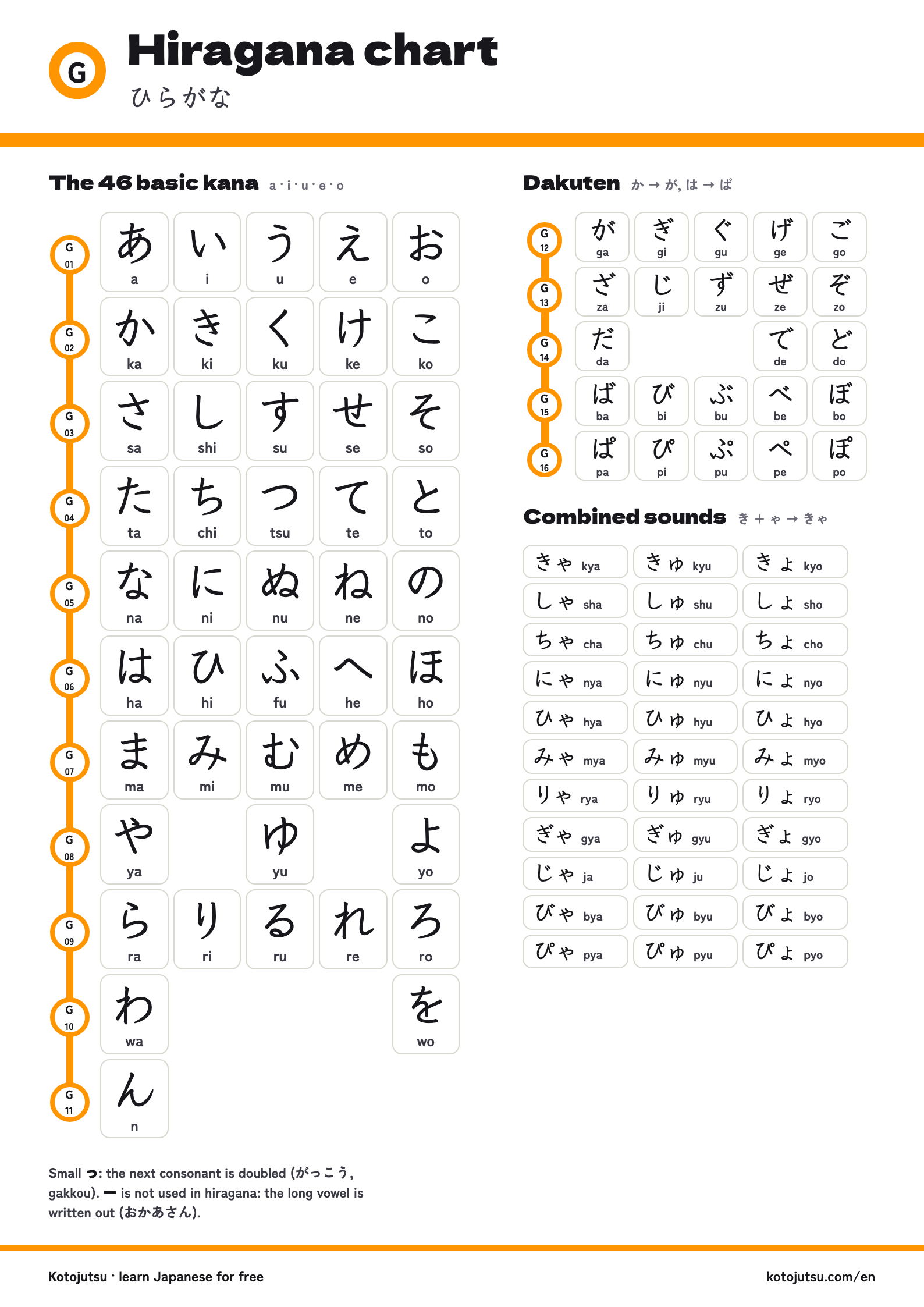
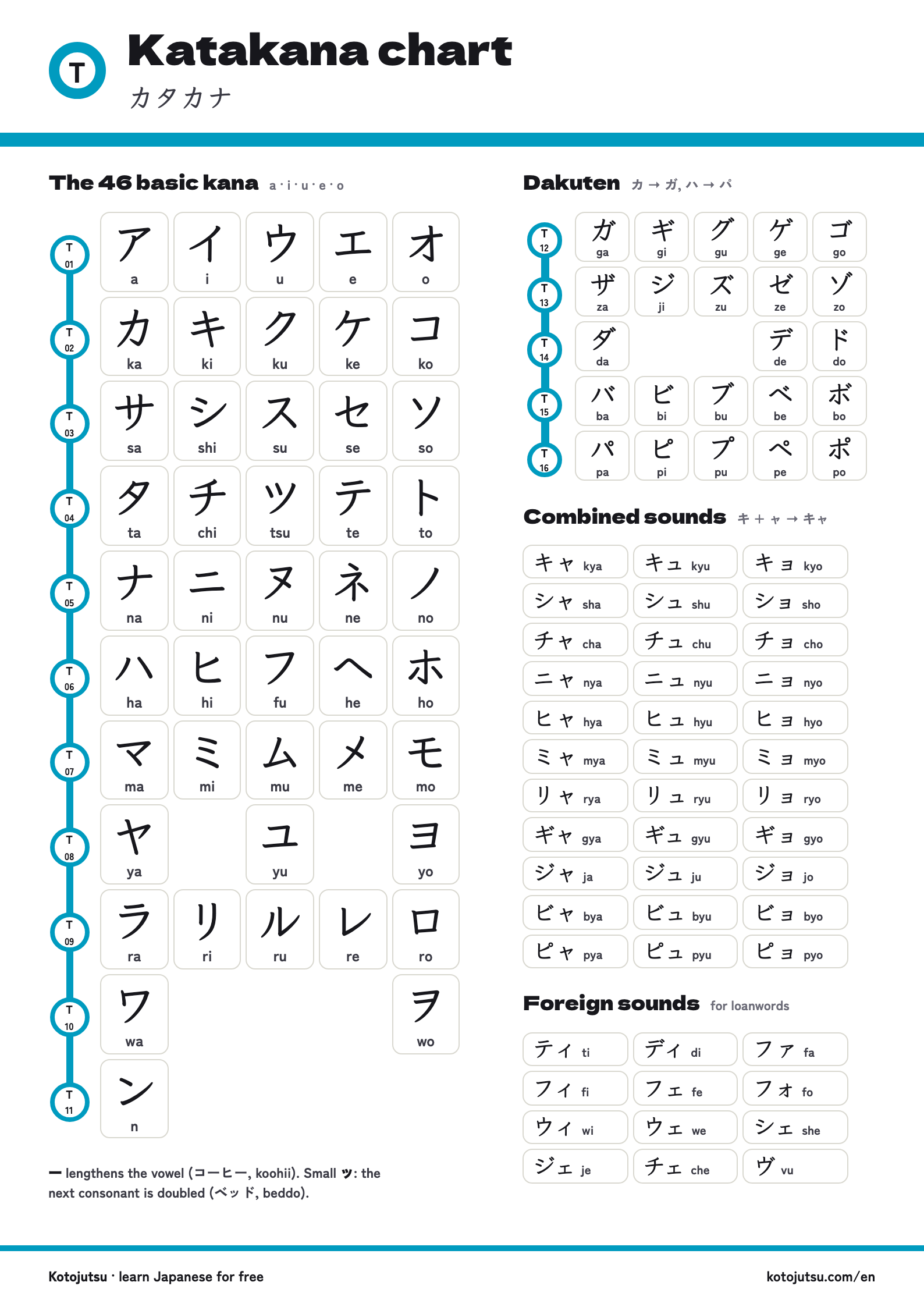
The two Japanese syllabaries on one A4 sheet each, to print and keep in sight: the 46 basic kana, dakuten (が, ぱ…), combined sounds (きゃ, しゅ…) and romaji. Free, no sign-up.
Hiragana chart
Katakana chart
How to use them
- Start with the left column: the 46 basic kana, one row per consonant. Each row is a station: one a day is a good pace.
- Cover the romaji with a strip of paper and read the kana aloud. Copy out the ones that won't stick, following the stroke order.
- Dakuten and combined sounds come next: they are rules, not new characters.
Free to study and to teach with
Print them, photocopy them for your class, put them on the wall: that's what they're for. To practise reading them fast, try the hiragana speed test.
Frequently asked questions
Are the charts really free?
Yes, with no sign-up and no email address. You can print and hand them out to study or teach; only commercial use is not allowed.
Why aren't ぢ and づ on the chart?
They sound like じ and ず and only appear in a few words (はなぢ, つづく), which you learn along with the word. The charts keep the kana you read every day.
Hiragana or katakana: which comes first?
Hiragana: they write word endings, particles and every Japanese word without kanji. Katakana are mostly for words borrowed from other languages, like コーヒー (coffee).